Our local partners
In order to be able to implement our visions, we need trusting and committed cooperation partners who live on site. We can never know a country and its culture to the extent that someone who grew up in it. For this reason, respectful development cooperation with people who lead our projects on the ground with dedication is important to us.
The successes of these projects are our best profit, but not our merit. Every success we realize is a success of children – who regularly show us that they are masters of the most difficult situations. At their side are our cooperation partners, who support them accordingly and always encourage them to grow beyond themselves.
Jesus-Mary-Joseph Order
The Catholic JMJ Order is committed to education and social development – regardless of religion or origin. Through projects such as sponsorships and school programs, he supports communities in need.
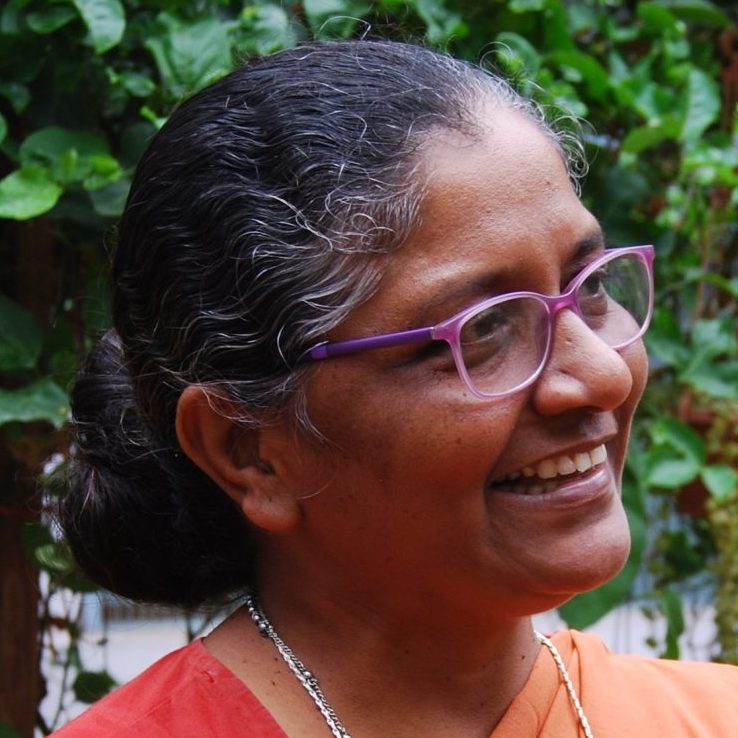
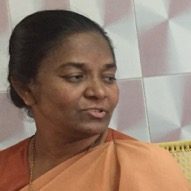
When did you start working for the project you are currently in?
The HDM project ()Hand des MenschenLaunched in 2014, it initially supported 22 orphans and half-orphans in five rural villages. The goal was to provide them with education, emotional support and long-term care.
By 2025, the project will support around 80 children. In 2023, we expanded the scope by introducing children’s parliaments, promoting inclusive education, and initiating value-driven leadership training to promote child-friendly development and social responsibility.
The HDM project builds on our previous grassroots work, in particular through the Women Integrated Development (WID) and Self-Help Groups (SHGs), which have strengthened over 3,600 women’s groups and laid the groundwork for community-based childcare.
Why are you doing this work?
Our work is based on the charisma of our founder, Father Mathias Wolff SJ, who strove for "always adaptable apostolic availability". This inspires us to respond with compassion and commitment to the needs of the times.
We are motivated by a deep responsibility to give voice to the voiceless – especially children who are orphaned, neglected or in need of protection. Our mission is to create a safe, nurturing and empowering environment where every child can reach their full potential.
We believe that every child with the right opportunities can be a catalyst for change in the community. The children we help today are the leaders of tomorrow.
Why is your work so important to the children?
In rural and marginalised communities, children are often the most affected by poverty, loss and social collapse. Many have lost one or both parents and live in unstable circumstances. Our work helps them regain their childhood by providing them with emotional care, educational support, protection from abuse and personal counseling.
Our programs offer:
- Access to education
- Emotional stability and belonging
- Protection against child labour, human trafficking and child marriage
- Leadership, self-confidence and self-esteem
We see every child as an engine of change, and our goal is to prepare them to survive in society with dignity, resilience and determination.
What exactly is being done in your project?
We run a holistic child development program with the following key activities:
Day of Solidarity with Orphans
- Women from support groups come together annually and donate their time and money.
- Celebrating a joint birthday for orphans.
- Discussions about education, rights of girls and the termination of child marriage.
(b) Day of school preparation
- It takes place every year in June.
- Implementation of motivation and awareness events.
c) Education
- provision of school money, materials and support for accommodation.
- Preventing school breaks through timely help.
d) Talent Show (October)
- Cultural Day for orphans, where they can express themselves through music, dance, art and speeches.
- Promotes family spirit, self-confidence and creativity.
e) Children's parliaments
- Children discuss and guide local topics.
- Promoting democratic values, leadership qualities and teamwork.
f) Life competencies and value education
- Knowledge of rights, hygiene, environment, gender issues and personal development.
(g) Integration of parents and community
- Supporting parents through advice.
- Ensuring awareness campaigns on child rights and security.
h) Mentoring and personal care
- Regular contact, advice and emotional support.
- Celebrating successes and tracking progress.
What is the philosophy of your work?
Our work is based on the following principles:
1. The Community as the centre of change
- Development begins when people feel responsible for each other.
Two. Participation and planning
- Enabling communities to analyze and address their own reality.
3. Collective action
- Support for community-oriented solutions for social change.
4. Sustainability
- Ensure that communities maintain their unity, values and independence.
We believe that permanent change begins at the base and that children must be considered active participants and not passive beneficiaries.
What are future plans for the project?
Our priorities include:
- Extension of the children's parliaments to other villages.
- Establishment of support centres with a focus on English teaching.
- Establishment of a children's resource centre for:
- Learning and digital access
- Advice and emotional well-being
- Life competencies and management development
- Mentoring programmes for young people by Alumni.
- Building environmentally friendly model villages through green initiatives for tree planting led by children.
When did you start working for the project you are currently in?
I started in August 2013.
Why are you doing this work?
To teach the children education and give them spiritual support.
Why is your work so important to the children?
Because of education, medical care, food and clothing, as well as moral support.
What do you need most to help the children?
The most important thing is to pay the school and housing allowances and the teachers.
What is the philosophy of your work?
To give the children a better future and to teach you important things. Since they live in a slum, they should also learn the right behavior/environmental forms.
What are future plans for the project?
To train more children and to develop the slum region.
What exactly is JMJSSS?
JMJSSS is one of the sisters of the Society of Roman Catholic, religious minorities, known as the Society of Jesus, Mary and Joseph (JMJ) and his headquarters is located in Mangalagiri. It is a non-profit, charitable and voluntary organization, registered under the Social Regulation. Since the Association began in India in 1904, social work has also begun. Since JMJ is identified from the outset with social apostolate, it operates several activities in different parts of India in cooperation with the government and non-governmental organizations.
The activities continued with their heights and depths until 1994, which was the beginning of a new era in which a secure foundation was guaranteed by full involvement and cooperation with "Bala Vikasa" (NGO). The experience collected provided an office facility for 1998.
At present, JMJSSS covers a range of 33 villages in which it promotes self-help through a variety of educational, performance-promoting, economic, cultural and social programs.
Self-help groups (SHG) have dramatically changed women's lives. In the past, they have pledged their property for the lowest prices, today all women have savings. JMJSSS has formed self-help groups with about 2000 members consisting of about 10-15 women per group. JMJ encourages saving and giving a fair amount.
Women have identified 70 orphans who have no access to education. Some of them were left alone as a coup d'état, as no one took care of them. It is a burden for the other family members because of their poverty, uneducation and illiteracy to take care of the well-being and education of children. If they receive the possibilities and appropriate guidance, these children can be highly committed to solving problems and could play a key role in community development.
Why are you doing this work?
The target group is always the poor, deprived and oppressed, people with no right to speak who are at the edge of society. Social activities aim at the liberation from the bondage of evil, unjust structures, exploitation and cruelty. At the same time, there is an awareness among rich and socially elevated people to share their responsibilities and to help those in need.
Why is your work so important to the children?
In rural villages where poverty and unemployment are widespread, the collapse of family communities by the death of one or both parents makes the children mediumless, broken and uneducated. JMJSSS is working to improve the situation of these orphans/half orphans through an innovative community-led initiative in which local women's groups take care of orphan children with love and financial support.
What exactly is being done in your project?
- The poor contribute to the poorest
Every year, a day called "Solidarity with orphans" is organized. Women pay voluntarily for their arrival, sacrifice their daily wage, cook meals for the children and come up with 50 rupees per year for educational and other expenses, with particular emphasis on social responsibility. On this day a common birthday will be celebrated for all children. There are also contributions to the importance of education, to deter children's marriages, and to children's rights of thousands of women present.
- School preparation day
JMJSSS organizes a school preparation day before the start of the new school year in June. The aim of this assembly is to prepare orphan children for the new academic year and to equip them with necessary things, such as uniforms, books and hygiene articles. Staff and district coordinators give children advice on punctuality, time management, hygiene, good leadership qualities and friendship in lectures.
- Educational support
JMJSSS supports the school and higher education of orphans and semi- orphans through donations collection.
- Performance
Every year in October, cultural events are organised for orphans. The children take part with great motivation and enthusiasm and show their unique skills in writing, drawing, dancing, speaking, singing, music, etc. The children are also encouraged to give group presentations, so they learn team spirit.
- Excursion
All the other children who have parents enjoy the time with their family members during the holidays by making picnics and excursions. To fill the emptiness of loneliness and non-desires and to make our children happy and to give them to understand that they also have a family that loves them and thinks of them, a day trip is planned for them.
What is the philosophy of your work?
- The Community is the centre of development, so the members of the Community should respect each other and know that they need each other (common community).
- In the second step, the Community participates in the analysis of micro- and macro-adjustments and begins with the planning of intervention in various stages of development.
- In the third step, the Community would begin an action process for its own improvement. Part of the process is also networking with neighbouring communities to achieve common goals. This is also the step in which the Community economy is stabilised.
- The fourth and final step is reached when the Community is able to maintain its unity and value system and to continue the work. This step empowers the community to self-sufficiency with a strong unity and a value system with resources and concern for fellow human beings.
What are future plans for the project?
- Introduction of the children's parliament, including the other children of the villages
- Teaching centres with special English lessons in villages
When did you start working for the project you are currently in?
I start with all respect for and greetings to you. I am Sister Nirmala Mary Allam and currently I am responsible for the Swadhar Women's House in Tenali. I am a trained social worker and have 15 years of experience in social work. I've been working as head of JMJ Swadhar Women's House since 2013.
Why are you doing this work?
I motivate the fulfillment that I have to work in the service of disadvantaged women and children of this great organization. I have seen the unfortunate lives of disadvantaged and defenceless women. I have met widows, pitiful and lonely women, victims of sexual violence and crime, (compulsory)-prostitutes and natural disasters, etc. Because of poverty, they could not receive support from their families and because of depression they have committed suicide, leaving their children behind as orphans. Finally, these children become criminals, which leads to a further social problem. Under these circumstances, our organization is able to give desperate women accommodation, even thanks to your financial support. It is therefore our hope to give the majority of these women the necessary help with the 'SWADHAR GREH'. Volunteers working in Swadhar are a warm-hearted, courageous group of people who sincerely believe in helping to educate women and children and morally educate those who suffer misfortune in life.
I am very pleased to see that their work on social media experiences a greater appreciation and recognition, so that more and more people around the world get the opportunity to be connected to the Swadhar family.
We see education as the most important means to combat poverty, strengthen women's rights, protect children from dangerous and exploitative work and sexual abuse, protect human rights and democracy, protect the environment and influence population growth. Our focus is on basic education, early childcare, as well as development and learning in adulthood.
Why is your work so important to the children?
- My work is very important for the children as I support them whenever they are in particular psychological, emotional, physical and social difficulties.
- The victims acknowledge as they are.
- The inhabitants of the home let their past forget and allow them a happy future.
- Give them the confidence to meet the challenges of life.
- Prepare to live independently.
- To continue to help the people re-entered into society.
What exactly is being done in your project?
- Residential home that offers a sanctuary, food, clothing, education and medical care.
- Training to improve skills and professional training for girls/women.
- Advice, training for attention and behaviour.
- Legal advice and assistance.
- Being a supportive system that knows and meets the needs of desperate women/children.
- To enable them to restart their lives with dignity and conviction.
What is the philosophy of your work?
- "Sleep visions like glittering objects. With your heart, your mind, your thoughts and your soul, stand behind your smallest deeds."
- "We strive for a society where every woman's dignity is held up and every woman feels that her existence is a blessing to society in which she lives."
- "If everything is lost, one thing will remain, namely the future."
What are future plans for the project?
- to be able to maintain Swadhar independently.
- To have the resources for the construction of storage and transport facilities
M.B. and Harini Sadashiv
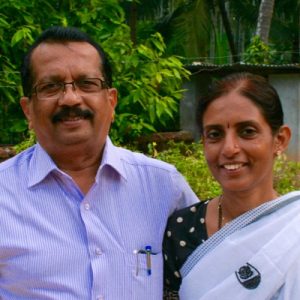
The M.B. Foundation was originally founded by M.B. and Harini Sadashiv in 1999 and registered as "M.B. Foundation (R)" in 2001. The aim of the couple is to give the poor and the needy a helping hand.
When did you start working for the project you are currently in?
The M.B. Foundation was founded in 1999 and registered in 2002-2003. Harini has studied the education of mentally and physically impaired children to acquire the necessary knowledge.
Why are you doing this work?
The married couple Sadashiv organized an event for mental health in a Sunday in their hometown, where renowned doctors and neuromedicine took part. They expected about 50 people, but to their big surprise came over 200 patients. They were children with various mental and physical impairments, all from very poor families. This has motivated the Sadashivs to establish an NGO to permanently help the needy children.
Why is your work so important to the children?
The work of our NGO is so important because we live in a small town where there are no suitable facilities for disabled children. Children come from families, minorities and the lower caste. Their families do not have enough income to provide or train their children and feel that their children are an additional burden for them, as they can not earn money later. The M.B. Foundation accepts the children and creates awareness among parents to better treat them.
What exactly is being done in your project?
We operate the Sandeep Special School, a school for mentally and physically impaired children, in which trained specialists and therapists work. There the children are trained accordingly. In addition, parents are taught how they can best take care of their disabled children. The foundation also operates many other projects, including:
- Organization of camps/events to raise awareness of AIDS/HIV, to give women a voice, to offer free medical care, to convey the importance of environmental protection, etc.
- Support for orphanages and old homes
- Implementation of welfare programmes for members of the lower caste and minorities
- Promoting education for children from economically and socially underdeveloped families, by promoting their access to state institutions.
What is the philosophy of your work?
We have the simple philosophy of allowing disabled people to participate in social life. Help the affected people to help themselves through consciousness, support, training and training. The aim is to bring them into the middle of society. Our motto is "the needy". Our vision is to establish a civilized society through the mediation of education, knowledge, skills and equality.
What are future plans for the project?
- Building a home for children who need more help than their families can give them
- Start of a Physiotherapy Centre
- Start of a language therapy center
- Start of a computer training center
- Start of a centre for voice development
- Communication development
- Therapy Unit for Sensory Development
- Family consultancy centre
Supporting partners
Our support partners are on our side. With heart, deed and trust.
Thanks to their support, we can give children safe places to learn, laugh and grow in difficult situations of life. Each contribution is a piece of hope – and together we give the future.
Companies and Commercial Partners




Universities and schools






Foundations and associations